

 Image 1 of 1
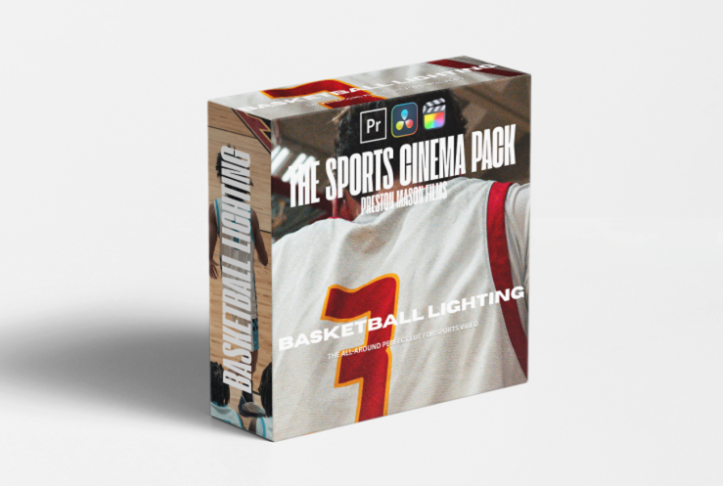
Basketball Lighting
The All-Around Perfect LUT for Basketball Under Gym Lighting
Why you need a dedicated LUT
Indoor basketball lighting is a completely different challenge from outdoor sports. You’re dealing with mixed color temperatures (LED, sodium vapor, fluorescent), uneven court lighting, dull skin tones, and blown highlights on jerseys and hardwood reflections. A purpose-built LUT helps normalize these inconsistencies, keeping footage clean, consistent, and game-ready without constant manual correction.
What this LUT does
Balances exposure
Controls bright hotspots from overhead lights and reflections on the court, keeping white jerseys and polished wood from clipping while maintaining detail.
Controls contrast
Reduces harsh contrast from uneven lighting across the court, preserving detail in both shadowed benches and brightly lit key areas.
Neutralizes color casts
Corrects green/magenta shifts common in gym lighting while stabilizing yellows from wood floors and mixed lighting sources.
Enhances skin tones
Keeps skin tones natural and consistent, preventing the typical green or washed-out look caused by indoor lighting.
Adds subtle broadcast-style punch
Applies a controlled S-curve to give footage a clean, high-energy look similar to televised basketball—crisp but not overprocessed.
Maintains consistency across angles
Helps unify footage from multiple cameras that may react differently to gym lighting.
Technical characteristics
Input formats
Optimized for Rec.709 footage (primary use). Can be applied after log-to-Rec.709 conversion for S-Log3, V-Log, C-Log, or BRAW.
Contrast curve
Moderate S-curve with a slightly raised black point (~2–4%) to avoid crushed shadows, plus a soft highlight roll-off to handle overhead lighting.
Gamma
Slight midtone lift to keep players’ faces and jerseys visible even under uneven lighting.
Color adjustments
Greens: reduced slightly (-4 to -8) to remove gym lighting contamination
Yellows/oranges: controlled (-2 to -5) to prevent oversaturation from hardwood reflections
Reds: subtle boost (+2 to +4) to keep team colors strong
Overall saturation: gently balanced rather than boosted
White balance bias
Minor magenta correction (+0.1 to +0.3 tint) to counter green-heavy indoor lighting.
Luminance mapping
Soft highlight compression to preserve detail in:
Jerseys under lights
Court reflections
Scoreboards and signage
When to use it
Ideal for:
Indoor basketball games
High school gyms
Amateur and semi-pro arenas
Mixed lighting environments
Use as:
A base Rec.709 correction LUT for fast edits
A finishing LUT for consistent game footage
Not ideal for:
Outdoor sports (sunlight conditions)
Golden hour or cinematic lighting
Dark arenas or spotlight-heavy environments
Practical application tips
Expose for highlights
Indoor lights can clip fast—protect whites on jerseys and let shadows fall slightly.
White balance matters more than outdoors
Try to manually set WB in-camera. This LUT corrects shifts, but extreme mismatches will still show.
After applying the LUT, fine-tune:
Highlights: -5 to -12 (for jersey and light control)
Shadows: +3 to +8 (for bench and background visibility)
Saturation: small tweaks depending on team colors
Consistency tip
If using multiple clips, apply the LUT first, then adjust exposure per clip—not the other way around.
The All-Around Perfect LUT for Basketball Under Gym Lighting
Why you need a dedicated LUT
Indoor basketball lighting is a completely different challenge from outdoor sports. You’re dealing with mixed color temperatures (LED, sodium vapor, fluorescent), uneven court lighting, dull skin tones, and blown highlights on jerseys and hardwood reflections. A purpose-built LUT helps normalize these inconsistencies, keeping footage clean, consistent, and game-ready without constant manual correction.
What this LUT does
Balances exposure
Controls bright hotspots from overhead lights and reflections on the court, keeping white jerseys and polished wood from clipping while maintaining detail.
Controls contrast
Reduces harsh contrast from uneven lighting across the court, preserving detail in both shadowed benches and brightly lit key areas.
Neutralizes color casts
Corrects green/magenta shifts common in gym lighting while stabilizing yellows from wood floors and mixed lighting sources.
Enhances skin tones
Keeps skin tones natural and consistent, preventing the typical green or washed-out look caused by indoor lighting.
Adds subtle broadcast-style punch
Applies a controlled S-curve to give footage a clean, high-energy look similar to televised basketball—crisp but not overprocessed.
Maintains consistency across angles
Helps unify footage from multiple cameras that may react differently to gym lighting.
Technical characteristics
Input formats
Optimized for Rec.709 footage (primary use). Can be applied after log-to-Rec.709 conversion for S-Log3, V-Log, C-Log, or BRAW.
Contrast curve
Moderate S-curve with a slightly raised black point (~2–4%) to avoid crushed shadows, plus a soft highlight roll-off to handle overhead lighting.
Gamma
Slight midtone lift to keep players’ faces and jerseys visible even under uneven lighting.
Color adjustments
Greens: reduced slightly (-4 to -8) to remove gym lighting contamination
Yellows/oranges: controlled (-2 to -5) to prevent oversaturation from hardwood reflections
Reds: subtle boost (+2 to +4) to keep team colors strong
Overall saturation: gently balanced rather than boosted
White balance bias
Minor magenta correction (+0.1 to +0.3 tint) to counter green-heavy indoor lighting.
Luminance mapping
Soft highlight compression to preserve detail in:
Jerseys under lights
Court reflections
Scoreboards and signage
When to use it
Ideal for:
Indoor basketball games
High school gyms
Amateur and semi-pro arenas
Mixed lighting environments
Use as:
A base Rec.709 correction LUT for fast edits
A finishing LUT for consistent game footage
Not ideal for:
Outdoor sports (sunlight conditions)
Golden hour or cinematic lighting
Dark arenas or spotlight-heavy environments
Practical application tips
Expose for highlights
Indoor lights can clip fast—protect whites on jerseys and let shadows fall slightly.
White balance matters more than outdoors
Try to manually set WB in-camera. This LUT corrects shifts, but extreme mismatches will still show.
After applying the LUT, fine-tune:
Highlights: -5 to -12 (for jersey and light control)
Shadows: +3 to +8 (for bench and background visibility)
Saturation: small tweaks depending on team colors
Consistency tip
If using multiple clips, apply the LUT first, then adjust exposure per clip—not the other way around.