

 Image 1 of 1
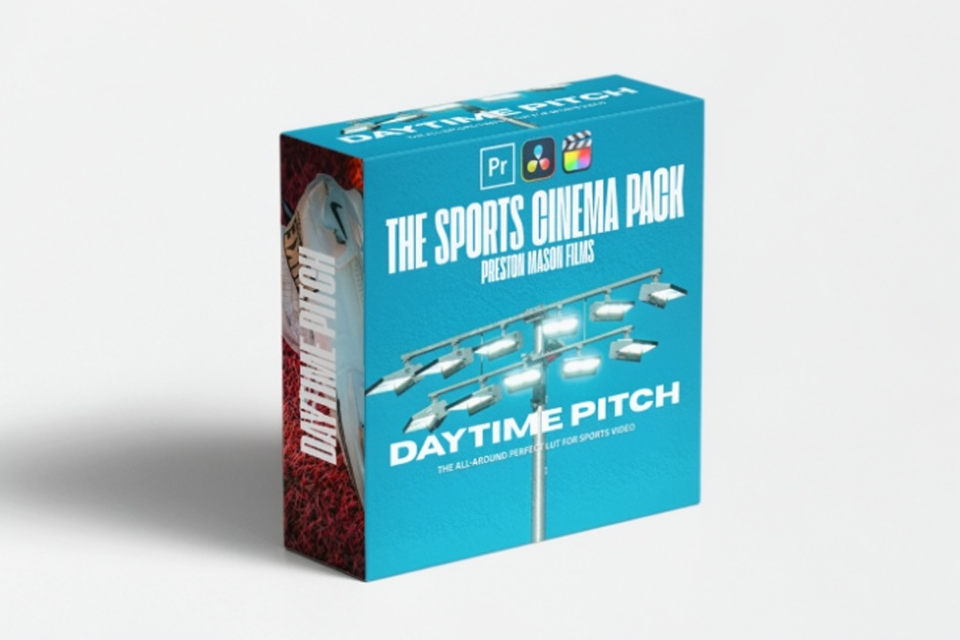
Title: The All-Around Perfect LUT for Sports Video During Sunny Days
Why you need a dedicated LUT
Sunny outdoor sports present specific challenges: high contrast, blown highlights on skin and uniforms, oversaturated colors (especially greens and blues), and harsh shadows. A well-crafted LUT solves these by preserving highlight detail, toning down color extremes, and adding a lively yet natural punch that keeps footage energetic without looking overprocessed.
What this LUT does
Balances exposure: recovers mid-highrange highlight detail while keeping sky and white jerseys from clipping.
Controls contrast: reduces harsh shadow-to-highlight jumps for readable details in both sunlit and shaded areas.
Neutralizes color casts: tames oversaturated greens and cyan blues while keeping team colors vivid.
Enhances skin tones: protects skin hues from shifting toward green or orange during strong sunlight.
Adds subtle filmic punch: introduces a gentle S-curve and pleasing shoulder roll-off so highlights roll softly rather than clip hard.
Preserves grading latitude: designed as a finish LUT that works across common log and Rec.709 sources with minimal tweak required.
Technical characteristics
Input formats: Designed to work well on S-Log3, V-Log, C-Log, BRAW, and Rec.709 footage. For log formats, use the LUT as a primary conversion or apply after technical conversion; for Rec.709, use as a creative grade.
Contrast curve: Moderate S-curve with a raised black point around 3–5% and a softened highlight shoulder to maintain detail above 80% IRE.
Gamma: Slightly lifted mids to retain detail in players’ faces and equipment when shadows are compressed.
Color matrix: Subtle desaturation on greens (-6 to -12 points) and cyans (-4 to -8 points), slight saturation boost on reds and oranges (+3 to +6 points) to preserve team colors and skin vibrancy.
White balance bias: Tiny cool bias (-0.2 to -0.5 CC towards blue) to counteract warm midday sunlight while keeping skin neutral.
Luminance mapping: Protects specular highlights with a gentler roll-off slope, preserving texture in helmets, sunglasses, and wet surfaces.
When to use it
Ideal for: Outdoor sports in direct sunlight — baseball, soccer, football, tennis, track and field.
Use as: A quick base grade for fast turnaround edits or as a starting point for further creative grading.
Not ideal for: Golden hour, overcast, indoor arenas, or night sports; those situations need different color/contrast handling.
Practical application tips
Exposure first: Always aim to expose for highlights. Use LUT after technical exposure adjustments. If shooting log, apply LUT after converting to a usable contrast curve unless the LUT is explicitly built as a log-to-Rec709 transform.
White balance: Set a clean white balance in camera where possible. This LUT corrects mild warmth but isn’t a substitute for proper WB.
Tweak sliders: After applying the LUT, expect small adjustments — lift shadows slightly, reduce highlights if skies clip, nudge saturation for team colors. Typical adjustment ranges: Highlights -5 to -15, Shadows +3 to +10
Title: The All-Around Perfect LUT for Sports Video During Sunny Days
Why you need a dedicated LUT
Sunny outdoor sports present specific challenges: high contrast, blown highlights on skin and uniforms, oversaturated colors (especially greens and blues), and harsh shadows. A well-crafted LUT solves these by preserving highlight detail, toning down color extremes, and adding a lively yet natural punch that keeps footage energetic without looking overprocessed.
What this LUT does
Balances exposure: recovers mid-highrange highlight detail while keeping sky and white jerseys from clipping.
Controls contrast: reduces harsh shadow-to-highlight jumps for readable details in both sunlit and shaded areas.
Neutralizes color casts: tames oversaturated greens and cyan blues while keeping team colors vivid.
Enhances skin tones: protects skin hues from shifting toward green or orange during strong sunlight.
Adds subtle filmic punch: introduces a gentle S-curve and pleasing shoulder roll-off so highlights roll softly rather than clip hard.
Preserves grading latitude: designed as a finish LUT that works across common log and Rec.709 sources with minimal tweak required.
Technical characteristics
Input formats: Designed to work well on S-Log3, V-Log, C-Log, BRAW, and Rec.709 footage. For log formats, use the LUT as a primary conversion or apply after technical conversion; for Rec.709, use as a creative grade.
Contrast curve: Moderate S-curve with a raised black point around 3–5% and a softened highlight shoulder to maintain detail above 80% IRE.
Gamma: Slightly lifted mids to retain detail in players’ faces and equipment when shadows are compressed.
Color matrix: Subtle desaturation on greens (-6 to -12 points) and cyans (-4 to -8 points), slight saturation boost on reds and oranges (+3 to +6 points) to preserve team colors and skin vibrancy.
White balance bias: Tiny cool bias (-0.2 to -0.5 CC towards blue) to counteract warm midday sunlight while keeping skin neutral.
Luminance mapping: Protects specular highlights with a gentler roll-off slope, preserving texture in helmets, sunglasses, and wet surfaces.
When to use it
Ideal for: Outdoor sports in direct sunlight — baseball, soccer, football, tennis, track and field.
Use as: A quick base grade for fast turnaround edits or as a starting point for further creative grading.
Not ideal for: Golden hour, overcast, indoor arenas, or night sports; those situations need different color/contrast handling.
Practical application tips
Exposure first: Always aim to expose for highlights. Use LUT after technical exposure adjustments. If shooting log, apply LUT after converting to a usable contrast curve unless the LUT is explicitly built as a log-to-Rec709 transform.
White balance: Set a clean white balance in camera where possible. This LUT corrects mild warmth but isn’t a substitute for proper WB.
Tweak sliders: After applying the LUT, expect small adjustments — lift shadows slightly, reduce highlights if skies clip, nudge saturation for team colors. Typical adjustment ranges: Highlights -5 to -15, Shadows +3 to +10